Inspired by the Brontës

This month I had a mini writing retreat at home with my cousin. We took a couple of days off work to write, read and visit nearby places for inspiration.

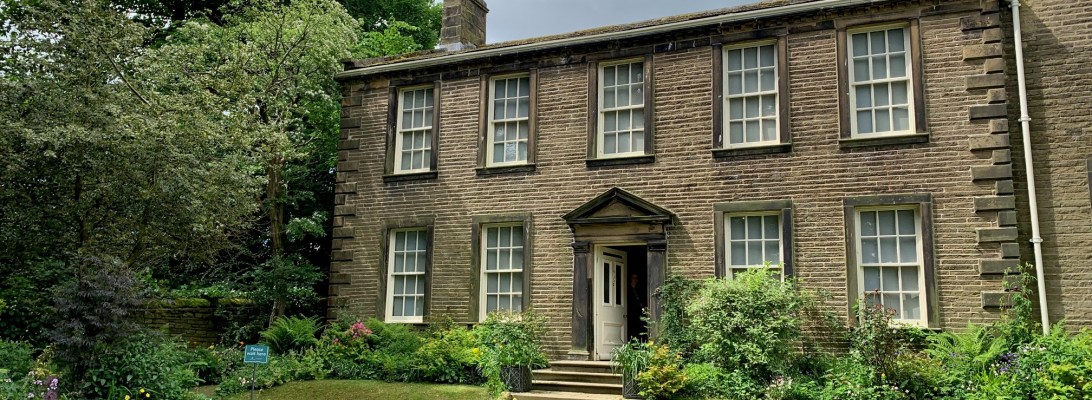
I am lucky enough to live in Brontë country so a trip to the Brontë Parsonage Museum in Haworth was essential.

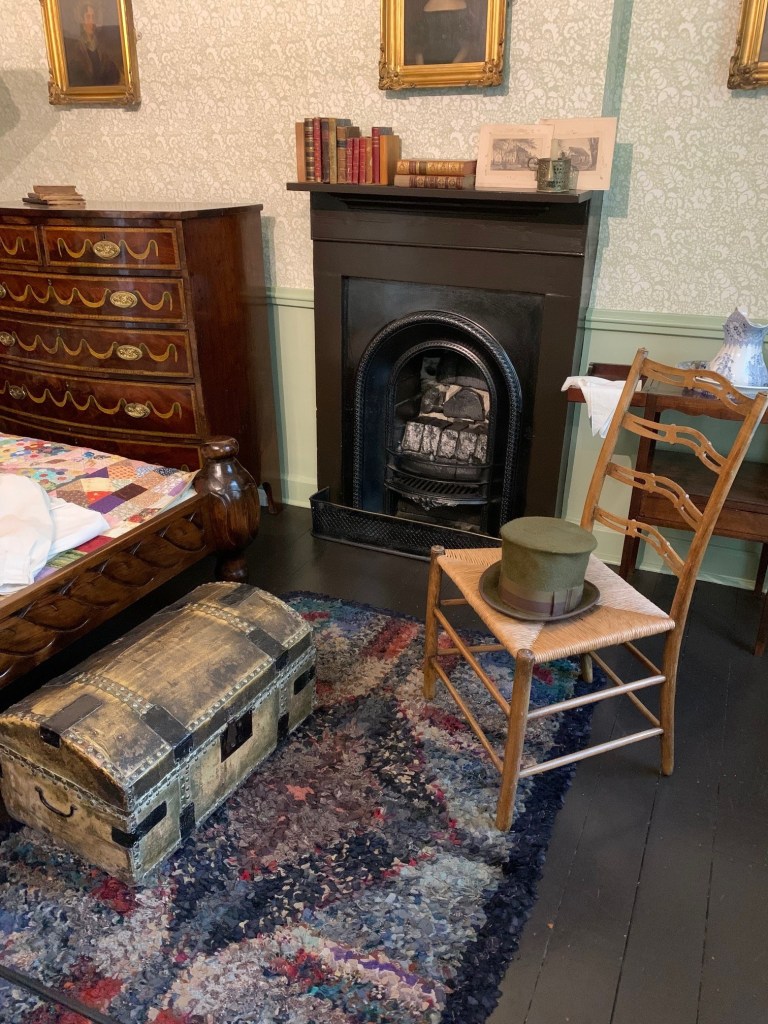
It’s a museum I have been to many times: as a child, a teenager and an adult but every time I go there is something new to see. At the moment (June 2024) there is an exhibition exploring the Brontë’s childhood and it was fascinating to see how their imagination fed into their later works.

Bronte Parsonage Museum

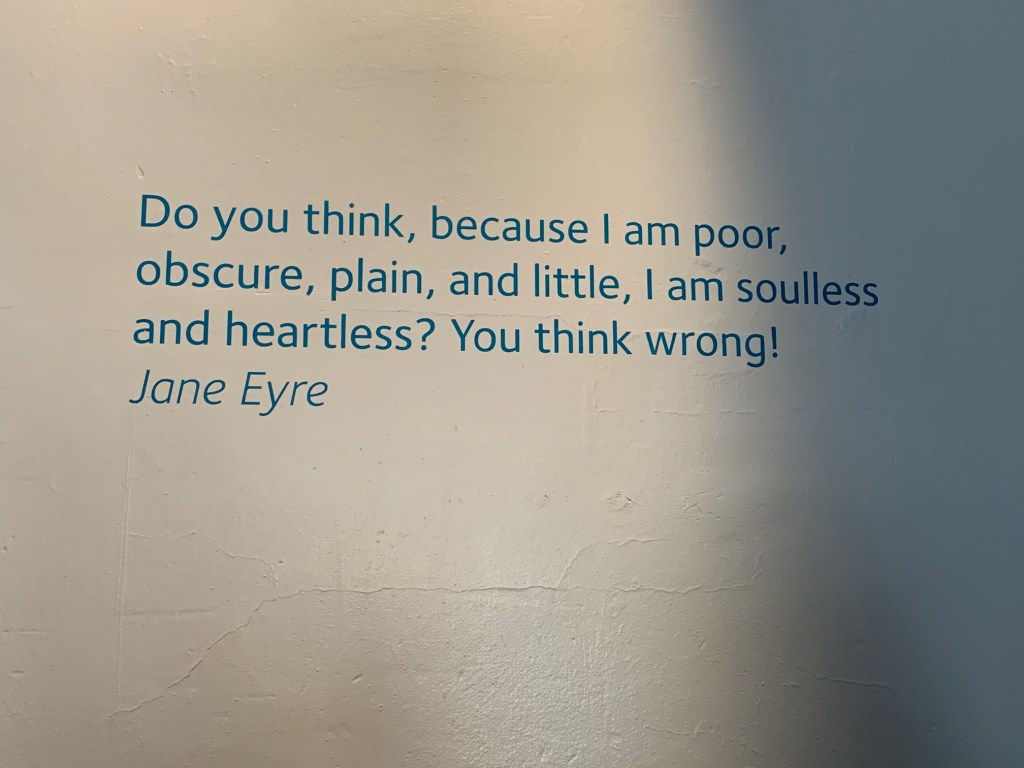
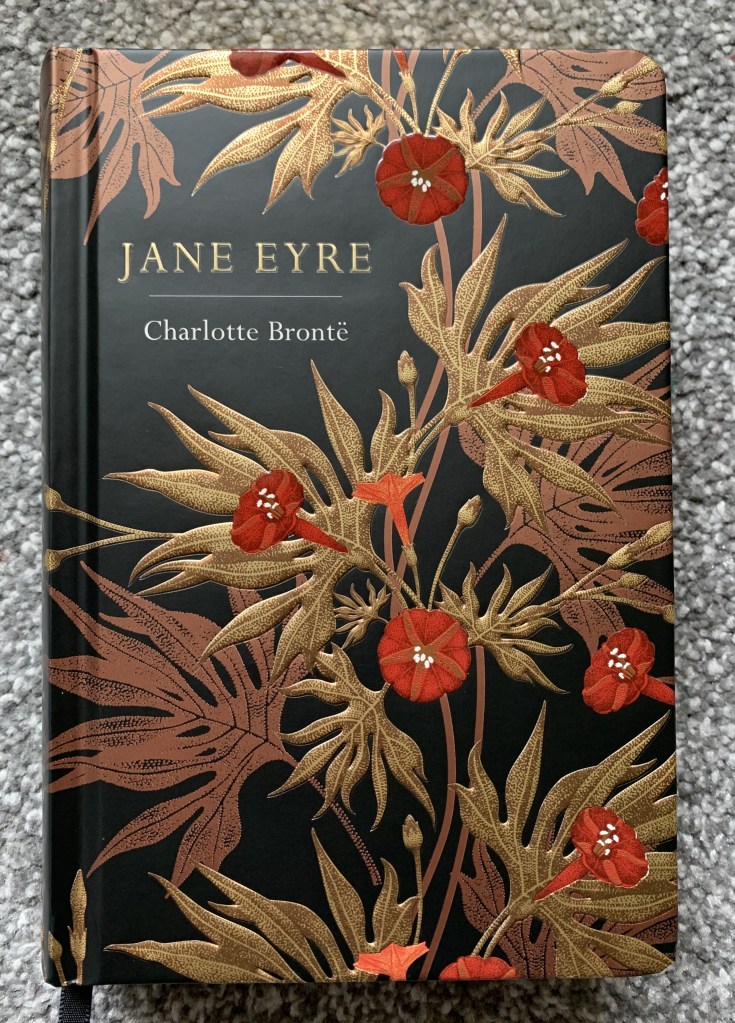
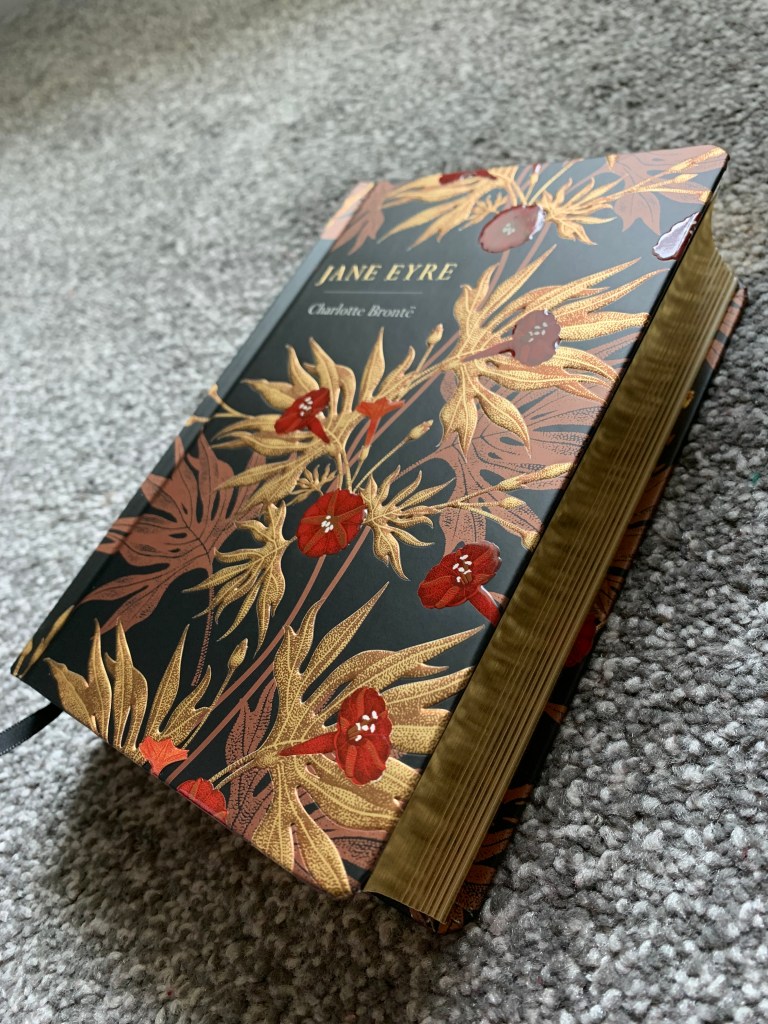
Jane Eyre by Charlotte Bronte is one of my favourite books of all time, but it’s been a while since I read it. I bought this beautiful copy from the gift shop.

And I discovered a new shop in Haworth that combines my love of books with my love of stationery. Oh La La The Original Bronte Stationery Store is a treasure trove of book-related stationery and posters. I will definitely be coming back for birthday and Christmas presents.

We rounded off our trip at The Cloth Store café which serves delicious hot chocolate. It was fairly quiet, so we spent a happy hour there writing I was inspired by our trip to explore the sibling relationship between two of my characters, and also my main protagonist’s taste in men! I was trying to decide if she would be Team Rochester or Team Heathcliff.

On the Shelf: January 2023 reads

In January 2023 I read:

  • The Miniaturist by Jessie Burton (re-read)
  • The House of Fortune by Jessie Burton
  • Zen in the Art of Writing by Ray Bradbury (non-fiction)
  • Shiver by Allie Reynolds
  • Norse Mythology by Neil Gaiman
  • The Recovery of Rose Gold by Stephanie Wrobel
  • The Plot by Jean Hanff Korelitz (re-read)
  • In the Blink of an Eye by Jo Callaghan
  • Brave New World by Aldous Huxley

Jessie Burton is one of my favourite writers and The Miniaturist was a re-read. I wanted to immerse myself in the world of 18th century Amsterdam again before I read the sequel, The House of Fortune. You could, perhaps, read the second as a stand alone but I thought it was better in sequence. Jessie Burton’s prose is superb and she has the ability to transport you anywhere and to any time. I loved the main character and all the historical detail in The House of Fortune, but I preferred The Miniaturist overall.

If you enjoy fast-paced psychological thrillers, I wholeheartedly recommend Shiver by Allie Reynolds and In the Blink of an Eye by Jo Callaghan. I thought both of them were excellent. They had all the elements you look for in crime fiction – a great plot, brilliant characters, a fast paced story and a satisfying ending, but each had an extra element which made them stand out for me.

Allie Reynolds’ book is set in the world of competitive snowboarding which I thought was really interesting and raised the stakes for her characters, while Jo Callaghan teams up an experienced human detective with an AI detective which was something I had never come across before and produced lots of great conflict and a touch of comedy.

Zen in the Art of Writing is a very inspiring book to read if you want to write and I also really enjoyed Neil Gaiman’s book about Norse Mythology.

The Plot by Jean Hanff Korelitz was another re-read. This time I am reading it for a book group, so I am keen to find out what other people think about it. It raises lots of interesting questions about writing and stories, and the main character is someone you love to hate. This time around I knew the ending, so it was fun to spot the clues I had missed the first time. I also enjoyed The Recovery of Rose Gold and the way Wrobel alternated between the daughter and the mother’s points of view.  

This is the first time I have read Brave New World. The style is quite different from contemporary fiction, so it took a little while to get into, but I enjoyed the moral dilemmas it raised and the acute observations about society, many of which are still relevant today.

Writing a Book: Week Four – Getting Creative

My first draft is MESSY! Really messy!

Yesterday I decided to change the plot extensively. It was too predictable. Everything felt like it had been done before. The plot felt OK when I did the synopsis but when I came to actually writing the scenes, I found I was getting bored and that wasn’t a good sign.

So, I gave my characters free rein. One of them decided to marry the bad guy – which definitely wasn’t in my original plan – and a new point-of-view voice emerged. My main characters also aged a decade. They might go back to being younger at some point.  

I’ve lost control of my story!

But I think that’s a good thing. It’s alright having a plan, but if it’s not working, then you just have to throw it out of the window and see what happens. There is no point in resolutely sticking to a plan that you know isn’t right.

Life has taken over a bit this week and as a result, I have slipped behind on my schedule. I had planned to write the first 20,000 words of the first draft by the end of August, but I have only managed 16,028.

I am not overly worried about this. I have redone my schedule so instead of aiming to finish the first draft by Christmas, I have given myself another month. As this book is not under contract, this isn’t a problem. Hopefully I will now finish the first draft by the end of January 2023.

Writing a book, week 3: developing characters

This week I have been mostly working on and thinking about the main character (MC) in my novel.

At the moment, my entire story is told from a single point of view, which is unusual for me. There are two timelines, so my character is talking in the past and in the current day (and at times, when she was a young teenager) so in total there are three voices, all belonging to the same character. I am trying to make these voices different because circumstances have changed her outlook on life. All of them are written in close third person.   

There are lots of personality quizzes you can complete online to develop your characters, but I find the best way to get to know my characters is just to write and think like them as much as possible. I often do ‘free writing’ where I will write as my character about what is happening to me or something that’s in the news. None of this goes into the book, but it helps me get a feel for their perspective on things and find out what they care about.

I also like to write out a character’s whole life story from when they were born (including details like their parents, siblings, grandparents) until the day they die even if that is not in the book. I like to know everything I can about their whole life before the action starts. This includes things like what kind of clothes they wear or what music they like.

I don’t spend a lot of time describing the physical appearance of my characters, unless it is relevant to the plot. I think most readers prefer to use their imagination but if I have written that they have blonde hair or green eyes, I make a note of that to make sure I am consistent.

A question some writers ask is ‘what does my character want?’. They then make it increasingly difficult for the character to achieve it. This creates conflict. Another question is ‘what does my character need?’ which is often different from what they think they want. That creates resolution because at some point they will have to give up what they desire for what they really need.  

I have had a few moments of doubt this week, largely because I feel like I don’t know much about the setting of the novel and need to do some research. I have tried to power through my doubts as I know I can work on that in the editing. For now, it’s more important to get those words down!

Progress week 3: 12,010 words

Writing a book, week 2 – finding time to write

When do you write? Do you write every day? Are you at your best first thing in the morning or late at night? Do you snatch 15 minutes to write in between a busy schedule or are you able to dedicate large chunks of undisturbed time to your writing?

I’m lucky in that I can usually find time to write most weeks. I don’t tend to write every day and I can’t spend hours and hours writing. I usually find my brain tires after a couple of hours of intense work. I work best in the morning and find it harder to get the words out by the evening.

Here are some tips I have found helpful to find the time, and the headspace, to write:

  1. Schedule writing time into your calendar and stick to it. You might want to do this at the start of the week or even at the start of every day. Treat it like an appointment with a friend and only cancel it if you really have no choice in the matter. Ask your family not to disturb your writing time.
  2. Cut back on television and checking your social media accounts. These activities can be used as treats when you have finished your writing for the day. But do your writing first!
  3. Be realistic – it’s better to write 200 words in a session than plan to write 1,000 and not find the time because you’ve set your goal too high.   
  4. If it’s really difficult to find time in the day to write, consider following the principles of the 5AM Club and get up an hour earlier than your household so you can work when everyone else is asleep. It’s tough but I found that I was really productive first thing in the morning. Less so by the afternoon!
  5. Use ‘dead time’ for thinking – when you’re waiting for someone, cooking tea or washing up. Keep a notebook handy for flashes of inspiration.
  6. Reward yourself – use a tick sheet or a reward chart to monitor your progress and give yourself a treat for completing your weekly and monthly goals.
  7. Switch your WiFi off when writing and leave your phone in another room. In Word, you can set the view to focus and your notifications to do not disturb. You may find you work more efficiently with fewer distractions.
  8. Try the Pomodoro Technique – set yourself a timer for say 20 minutes and in that time do nothing but write. You cannot look things up on the internet, check your phone, make a cup of tea or even go to the loo during this time. After 20 minutes you can have five minutes to rest and then set yourself another timer. You will race through your word count in no time.
  9. NaNoWriMo is a great way to motivate yourself to write. Although it happens every November, you can follow its principles at any time. Set yourself an ambitious goal for the month and do your very best to achieve it.
  10. Find a writing buddy or group to share progress with. Cheer each other on with positive comments.

Go easy on yourself – this is a marathon, not a sprint. If you’re feeling tired, do something less taxing, like some internet research or some light editing. Or set yourself a tiny target – just 100 words a day maybe – it soon builds up.  

At the end of the second week, the word count for my new book stands at 9,020 words. I am currently aiming for 20,000 by the end of August so I am on schedule. This won’t last!

Writing a book, Week One – the blank page

Is there anything worse than staring at a blank page? You have all these ideas but the minute you open that notebook or Word document, you don’t know where to start.

I think the main problem I face when starting a book is that I want everything to be perfect. I want that first line to be brilliant, quotable even. I want that opening page to shine. But usually at this point I just have some random thoughts that have no coherence. I don’t want to make a mess of that first page.  

The solution to the blank page? Start writing. Don’t worry about the quality. You can come back and fix that later. Don’t worry if you’re not starting at the beginning of the story. Don’t worry if it doesn’t make much sense. Just write whatever comes into your head. It may not make the final cut but that’s fine. The important thing is to get the words out.

Tell yourself this is draft zero, the ‘vomit draft’, and that everything will be edited many, many times. It doesn’t have to be good, it just has to exist.  

I started my new book on Monday, 1 August. It’s a novel I first started writing in 2018 but I abandoned it after 30,000 words. I know where I went wrong and my main character – Kelly – has been in the back of my mind ever since, wanting me to tell her story.

So how do you start a novel? Well, every writer is different, but I started by re-reading some craft books. My favourite is How to Write a Novel Using the Snowflake Method by Randy Ingermason. I don’t follow this method to the letter but it’s the one that works best for me. You alternate working on your plot and developing your characters so when you get stuck on one you shift over to the other. You also start with the synopsis and then expand out which works for me as I don’t always write chronologically.

I also like Stealing Hollywood: Screenwriting Tricks for Authors by Alexandra Sokoloff. Sokoloff recommends the four-act structure which is similar to a three-act structure but with a significant midpoint.

This time around, I am reading Writing the Breakout Novel by Donald Maass. This was recommended by a writing friend of mine and it’s the first time I’ve read it. It’s a bit intimidating but it is making me up my game.  

The first thing I did was sketch out what I know about the plot so far and the main characters. I sort of know what is going to happen at the beginning, middle and end although I’m not 100% sure how I am going to structure the story yet. There are three chunks of time in the novel and I’m not sure whether to present them chronologically or have two timelines running concurrently. I’m going to worry about that later.

I put together 20 plot points which will take me from the start to the end, but I may move things around a bit. This is enough for me to start writing. 20 plot points is 20 scenes and, at around 500 words each, that will give me the first 10,000 words. I will then go back and expand each scene and add others in between.

I don’t always start writing at chapter one. I write whatever interests me at the time, so I may write later scenes, but I do try to keep them in some sort of order.

I write in a Word document, and I label each scene with a heading so I can easily move them around. Some people use Scrivener for this, but I prefer Word. I usually number my scenes but for some reason, I want to name them this time. That may well change, but it feels right for this book at the moment.

I am aiming for 4,000 words a week, but I managed 6,175 words in my first week. This was largely because I transferred some across from my original draft. I knew I wanted to keep at least two scenes even though the rest of the book is going to change. At this stage I am not doing much research, but I keep a running list of what I need to find out about.

In between writing sessions, I keep a notebook with me at all times, and every time I have a spare 20 minutes or so, I sketch out ideas. Sometimes these are lists of things I want to include, or they might be snippets of conversation between the characters or free writing when I write whatever comes into my head.

I am aiming to complete this first draft before Christmas (4,000 words a week for 20 weeks) but I know other things will get in the way, so I just have to hope for the best! 

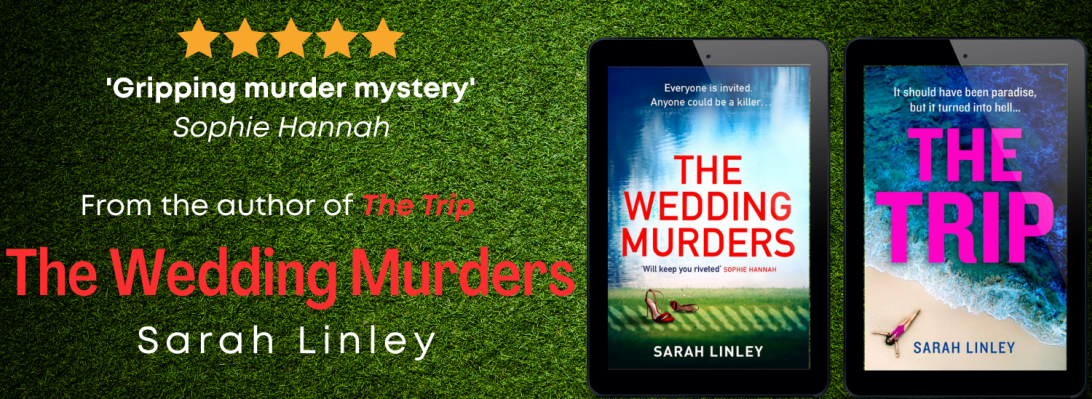
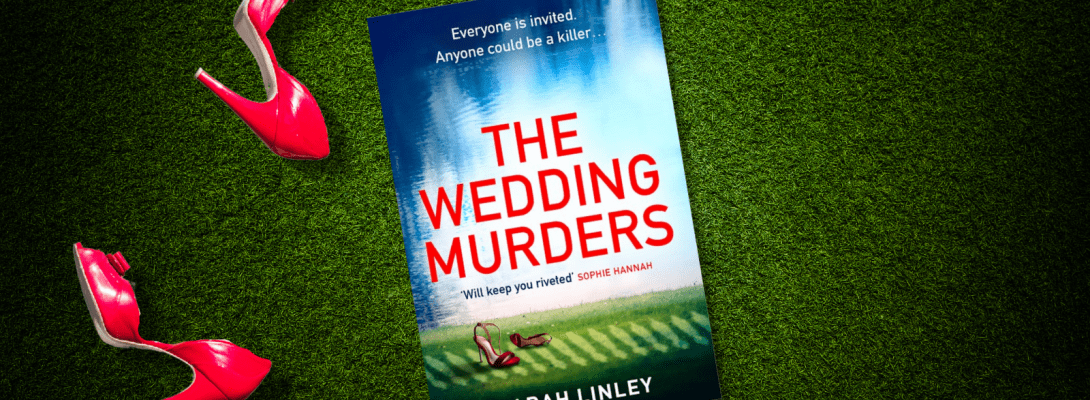
The Wedding Murders has a new cover!

My second novel, The Wedding Murders, has a new summer jacket!

I must admit I loved the old cover with its bright colour contrast but I think the new jacket is a closer reflection of the story. I particularly love the discarded high heels!

If you love closed-door mysteries, lots of 90s nostalgia, and a fast-paced plot, check out The Wedding Murders on Amazon UK or Amazon US

It’s also available as a paperback from Waterstones.

An interview with… J A Corrigan

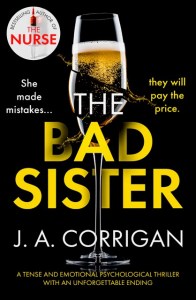
I am delighted to welcome fellow crime writer, Julie-Ann Corrigan to my blog. Writing as J A Corrigan, Julie-Ann has published three brilliant psychological thrillers: Falling Suns, The Nurse and The Bad Sister as well as historical fiction under her pen name, Jules Hayes.

Please introduce yourself and your published works

Hi Sarah, and thanks so much for hosting me on your blog.

My name is Julie-Ann Corrigan and I write psychological suspense thrillers as JA Corrigan.

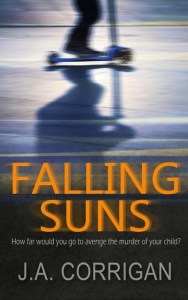
My debut thriller, Falling Suns, was published in 2016 by Headline Accent – a disturbing story about a mother dealing with the abduction and subsequent brutal murder of her young son. The story charts ex-detective Rachel Dune’s quest for revenge and retribution.

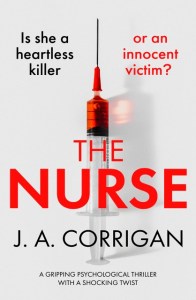
My second thriller, The Nurse, was published by Canelo in May 2021.

Again, it’s a story with a strong female protagonist (I like to think this is my literary signature!) – Rose Marlowe. The story opens with Rose being sentenced to 20 years in prison for the murder of a patient in her care. Rose pleaded guilty, but when washed-up journalist Theo Hazel begins visiting her in prison hoping for a ‘scoop’ he questions if in fact she is guilty of the crime. As Rose’s story unfolds, Theo’s intuition turns into hard facts, which he can’t ignore. Is Rose innocent, or is she manipulating Theo. Is she a cold-blooded killer, and a psychopath, or is she a victim of circumstance?

The Bad Sister is my third thriller, and my second  novel published with Canelo. The book released in April 2022.

This time I have 3 strong female protagonists – sisters, Natalie, Jessica and Teresa Keane. Narrated in 2 timelines, with 3 viewpoints (each sister), this is very much my Rubik Cube novel, as well as my lockdown book. I wonder sometimes if the two are connected!

The story opens in 1991 when the Keane family are throwing a party at the family home, the luxurious Raven House, for Teresa’s graduation and engagement. But when a young girl’s body is found on neighbouring Raven Island during the celebrations the family, instead of turning to each other, turn against each other. In the coming years the sisters become estranged, only brought back together more than 20 years later by another female family member, Natalie’s daughter. As the 3 sisters’ secrets begin to unravel, at last they confide in each other, with earth shattering consequences – and the reveal of the final Keane family secret.

When did you start writing? Can you tell me about your journey to publication?

I began writing in 2010, starting with short stories. I was lucky and these stories were published. In 2012 I began writing my first novel, a modern historical thriller set during the Spanish Civil War (I’m a history graduate.) This book was finally published under my pen name, Jules Hayes, in March 2021.

I began writing my first psychological thriller in 2013, this became Falling Suns. I went on to write another historical novel (which I self-published), and then I wrote a genre-straddler, set in Poland/Auschwitz in 1943 and present day UK – a dark thriller and with a detective! This book still sits in my drawer. We all have one… one day I hope it finds the light of day!

In 2018 I began writing The Nurse (although during its conception it did have another title!) This is the book that found me my agent, Camilla Shestopal.

In 2020-21 I wrote The Bad Sister.

What were the pivotal moments so far in your writing career and what have you learned from them?

Eliciting a standing ovation at an Open Mike night at the Hay Literary festival, and at the very beginning of my writing journey, and before I had a complete first manuscript. I thought I’d cracked it and I’d be JK Rowling in no time. Wrong! I think it taught me early on to take these things with a pinch of salt. Don’t take yourself too seriously.

My most recent pivotal moment was when Camilla (my agent) signed me with The Nurse. It’s a book I took a chance on writing – several people during its conception told me it would never be published – and so when the Canelo team offered a contract for the manuscript it was a very sweet moment, and also made me realise that a writer really does have to write what they want to write. Passion, enthusiasm and authenticity shine through.

What kind of research did you need to do for your latest novel, The Bad Sister, and how did you go about it?

The Bad Sister is set on the River Thames, and I was inspired by the location (near to where I live.) I was also inspired by people and families I’ve come into contact with over the years as my child was growing up – however, the story is utterly fictitious!

I did a fair amount of research into what it entails to be a barrister (Teresa’s character) and also a psychiatrist (Jessica’s character.) The original title for the novel was The Psychiatrist, which I rather like, as the plot pivots on what happens to Jessica, but ultimately, the novel was better served by a title signposting family dynamics within the story.

I also had a lot of research help from a criminal court judge, who read the relevant chapters for veracity. She is an amazing woman, who also encouraged me to be a little more edgy with the plot, explaining that much worse happens in real life!

With all of my books I tend to do a lot of research before and whilst writing them.  

Who are your favourite authors?

I have eclectic reading tastes, so I have many favourite authors!

In the thriller genre, my favourites include Alex Marwood, Barbara Vine, Patricia Highsmith, Erin Kelly, Fiona Cummins, and Minnette Walters.

I love DM Thomas (The White Hotel), Kate Atkinson and Cormac McCarthy. Thomas Harris, early Stephen King. Love John Irving, Murakami and yes, Ishiguru. Madeline Miller, Anne Patchett and Michel Faber.

What advice would you give to other people wanting to write?

Sit down and get the words down. I recently began working with a mentee, who was ‘thinking’ about starting a 1st novel. I told him to just write, that I had no care how bad it might be, because there was no way either of us could make it better until he wrote something.

For what it’s worth, with this particular writer, this advice was extremely effective. A big achievement for me (and him) would be to see him secure an agent, and a publisher. The circle for me would be complete.

Write, read. Write, read, and repeat, and live your best life at the same time (interaction with the world is imperative to authentic writing.) Try to find someone who is able to mentor you in those early stages, giving you the latitude to write a story you want to write, with no self consciousness, no inner critic, no negative vista.

Be authentic, to yourself and to your future readers.

Come off social media!

Finally, what are you working on now?

Currently I’m working on a contemporary thriller, and again one of the lead characters is a strong female protagonist, but there is also a detective (a male second lead), and several gruesome murders!

The novel’s themes encompass a pretty zeitgeist topic, as well as honour, love and loyalty. I plan a series with this book. I’m very excited about it.   

You can find out more about J A Corrigan on her website: jacorrigan.com or follow her on social media:

Twitter: https://twitter.com/juliannwriter 

Facebook: https://www.facebook.com/jacorrigan

Instagram: https://www.instagram.com/corriganjulieann/

An interview with… Abby Davies

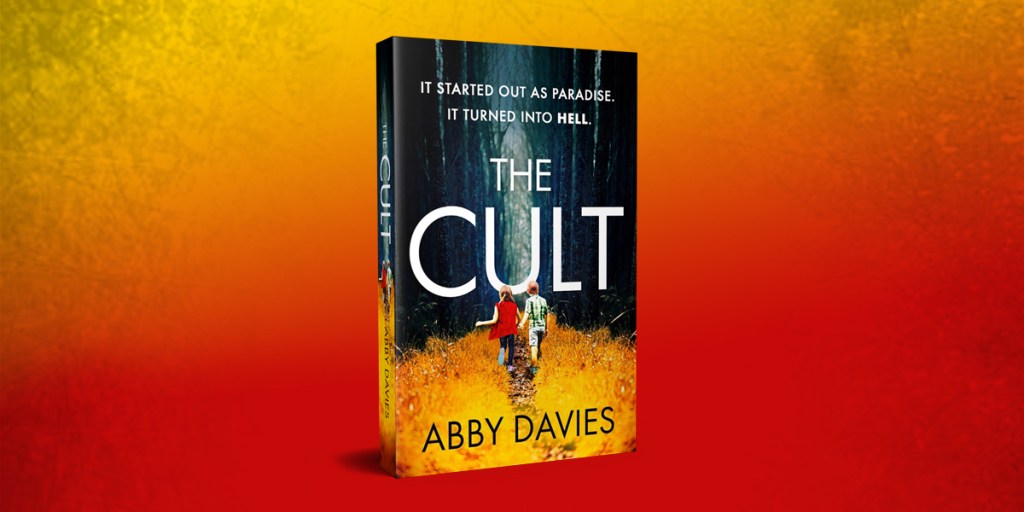
Abby Davies is a fantastic writer and I have been gripped by her first two psychological thrillers, Mother Loves Me and The Cult. I am delighted to share this interview with her.

Please introduce yourself and your published works

I’m 38, live in Wiltshire with my hubby, 4-year-old daughter and two crazy cockers, and I’ve always been passionate about reading and writing (and shopping). Mother Loves Me and The Cult are my psychological thrillers. I wrote Mother Loves Me while teaching secondary school English, which I think helped because it’s written from the POV of a 13-year-old girl. I even test-trialled the first chapter on my students, and completely freaked them out!

When did you start writing? Can you tell me about your journey to publication?

I wrote my first novel when I was 18, submitted it to about 20 agents and received 20 rejections! Every couple of years after that I wrote another book, experimenting with Young Adult Dystopian and books for younger readers as well as adult thrillers. In 2012 I did a Creative Writing MA which ironically damaged my confidence! I lost my mojo for a while, but when I read Emma Donaghue’s Room closely followed by S. J. Watson’s Before I Go to Sleep, the idea for Mother Loves Me sprang forward and I wrote my first ever psychological thriller. I submitted the first 5,000 words to Mslexia Novel Competition 2018 and was shortlisted! Part of the prize was to attend a pitching workshop in London. I pitched my book to an agent, and they offered me representation. After 17 years of hard graft, I’d finally got an agent! Euan secured me a publishing contract with HarperCollins and Mother Loves Me was published in 2020. The Cult came out the following year. It really was a dream come true.

What were the pivotal moments so far in your writing career and what you have learned from them?

A truly pivotal moment was receiving my first set of notes from my agent. I learned a great deal from Euan about pacing; never rush the scene when there is high tension – draw it out and let it build to maximise suspense.

What drew you to write crime fiction?

I’ve always watched and read crime, finding it absorbing, intriguing and exciting, so I think my love for the genre drew me to write it.

Who are your favourite authors?

Stephen King, Dean Koontz, Jane Austen, Jilly Cooper, JK Rowling, Kathryn Stockett and many more!

What advice would you give to other people wanting to write?

Read everything about writing that you can get your hands on, read numerous books in your chosen genre/area, enter competitions, and never ever give up. Rejection stinks but sadly it’s inevitable in this business.

Finally, what are you working on now?

I’m trying my hand at a rom-com! It’s so fun and refreshing to write something a bit lighter. I’m loving it!

Thanks Abby! You can follow Abby on Twitter @Abby13Richards and on Instagram @AbbyDaviesAuthor.