An interview with… J A Corrigan

I am delighted to welcome fellow crime writer, Julie-Ann Corrigan to my blog. Writing as J A Corrigan, Julie-Ann has published three brilliant psychological thrillers: Falling Suns, The Nurse and The Bad Sister as well as historical fiction under her pen name, Jules Hayes.

Please introduce yourself and your published works

Hi Sarah, and thanks so much for hosting me on your blog.

My name is Julie-Ann Corrigan and I write psychological suspense thrillers as JA Corrigan.

My debut thriller, Falling Suns, was published in 2016 by Headline Accent – a disturbing story about a mother dealing with the abduction and subsequent brutal murder of her young son. The story charts ex-detective Rachel Dune’s quest for revenge and retribution.

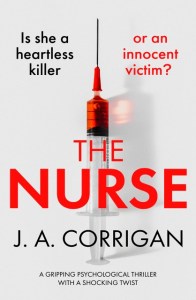
My second thriller, The Nurse, was published by Canelo in May 2021.

Again, it’s a story with a strong female protagonist (I like to think this is my literary signature!) – Rose Marlowe. The story opens with Rose being sentenced to 20 years in prison for the murder of a patient in her care. Rose pleaded guilty, but when washed-up journalist Theo Hazel begins visiting her in prison hoping for a ‘scoop’ he questions if in fact she is guilty of the crime. As Rose’s story unfolds, Theo’s intuition turns into hard facts, which he can’t ignore. Is Rose innocent, or is she manipulating Theo. Is she a cold-blooded killer, and a psychopath, or is she a victim of circumstance?

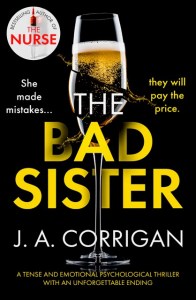
The Bad Sister is my third thriller, and my second  novel published with Canelo. The book released in April 2022.

This time I have 3 strong female protagonists – sisters, Natalie, Jessica and Teresa Keane. Narrated in 2 timelines, with 3 viewpoints (each sister), this is very much my Rubik Cube novel, as well as my lockdown book. I wonder sometimes if the two are connected!

The story opens in 1991 when the Keane family are throwing a party at the family home, the luxurious Raven House, for Teresa’s graduation and engagement. But when a young girl’s body is found on neighbouring Raven Island during the celebrations the family, instead of turning to each other, turn against each other. In the coming years the sisters become estranged, only brought back together more than 20 years later by another female family member, Natalie’s daughter. As the 3 sisters’ secrets begin to unravel, at last they confide in each other, with earth shattering consequences – and the reveal of the final Keane family secret.

When did you start writing? Can you tell me about your journey to publication?

I began writing in 2010, starting with short stories. I was lucky and these stories were published. In 2012 I began writing my first novel, a modern historical thriller set during the Spanish Civil War (I’m a history graduate.) This book was finally published under my pen name, Jules Hayes, in March 2021.
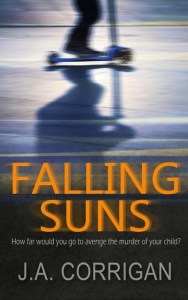
I began writing my first psychological thriller in 2013, this became Falling Suns. I went on to write another historical novel (which I self-published), and then I wrote a genre-straddler, set in Poland/Auschwitz in 1943 and present day UK – a dark thriller and with a detective! This book still sits in my drawer. We all have one… one day I hope it finds the light of day!

In 2018 I began writing The Nurse (although during its conception it did have another title!) This is the book that found me my agent, Camilla Shestopal.

In 2020-21 I wrote The Bad Sister.

What were the pivotal moments so far in your writing career and what have you learned from them?
Eliciting a standing ovation at an Open Mike night at the Hay Literary festival, and at the very beginning of my writing journey, and before I had a complete first manuscript. I thought I’d cracked it and I’d be JK Rowling in no time. Wrong! I think it taught me early on to take these things with a pinch of salt. Don’t take yourself too seriously.

My most recent pivotal moment was when Camilla (my agent) signed me with The Nurse. It’s a book I took a chance on writing – several people during its conception told me it would never be published – and so when the Canelo team offered a contract for the manuscript it was a very sweet moment, and also made me realise that a writer really does have to write what they want to write. Passion, enthusiasm and authenticity shine through.

What kind of research did you need to do for your latest novel, The Bad Sister, and how did you go about it?
The Bad Sister is set on the River Thames, and I was inspired by the location (near to where I live.) I was also inspired by people and families I’ve come into contact with over the years as my child was growing up – however, the story is utterly fictitious!

I did a fair amount of research into what it entails to be a barrister (Teresa’s character) and also a psychiatrist (Jessica’s character.) The original title for the novel was The Psychiatrist, which I rather like, as the plot pivots on what happens to Jessica, but ultimately, the novel was better served by a title signposting family dynamics within the story.

I also had a lot of research help from a criminal court judge, who read the relevant chapters for veracity. She is an amazing woman, who also encouraged me to be a little more edgy with the plot, explaining that much worse happens in real life!

With all of my books I tend to do a lot of research before and whilst writing them.  

Who are your favourite authors?

I have eclectic reading tastes, so I have many favourite authors!

In the thriller genre, my favourites include Alex Marwood, Barbara Vine, Patricia Highsmith, Erin Kelly, Fiona Cummins, and Minnette Walters.

I love DM Thomas (The White Hotel), Kate Atkinson and Cormac McCarthy. Thomas Harris, early Stephen King. Love John Irving, Murakami and yes, Ishiguru. Madeline Miller, Anne Patchett and Michel Faber.

What advice would you give to other people wanting to write?

Sit down and get the words down. I recently began working with a mentee, who was ‘thinking’ about starting a 1st novel. I told him to just write, that I had no care how bad it might be, because there was no way either of us could make it better until he wrote something.

For what it’s worth, with this particular writer, this advice was extremely effective. A big achievement for me (and him) would be to see him secure an agent, and a publisher. The circle for me would be complete.

Write, read. Write, read, and repeat, and live your best life at the same time (interaction with the world is imperative to authentic writing.) Try to find someone who is able to mentor you in those early stages, giving you the latitude to write a story you want to write, with no self consciousness, no inner critic, no negative vista.

Be authentic, to yourself and to your future readers.

Come off social media!

Finally, what are you working on now?

Currently I’m working on a contemporary thriller, and again one of the lead characters is a strong female protagonist, but there is also a detective (a male second lead), and several gruesome murders!

The novel’s themes encompass a pretty zeitgeist topic, as well as honour, love and loyalty. I plan a series with this book. I’m very excited about it.   

You can find out more about J A Corrigan on her website: jacorrigan.com or follow her on social media:

Twitter: https://twitter.com/juliannwriter 

Facebook: https://www.facebook.com/jacorrigan

Instagram: https://www.instagram.com/corriganjulieann/

On the Shelf: June 2022 reads

In June 2022, I read:

  • The Passengers by John Marrs
  • How to Write Like Tolstoy by Richard Cohen
  • The Nurse by J A Corrigan
  • One August Night by Victoria Hislop
  • Not a Happy Family by Shari Lapena
  • The Family Upstairs by Lisa Jewell
  • The Castaways by Lucy Clarke
  • The Maidens by Alex Michaelides

I was quite looking forward to the advent of driverless cars until I read The Passengers by John Marrs! This is a high-concept thriller about a future world in which driverless cars are the norm. But what happens if they get hacked? This is a fast-paced novel that kept me gripped until the end.

How to Write Like Tolstoy covers all the key aspects of writing a book: plot, structure, character, endings, and polishing prose. It takes examples from classic literature and explains the techniques great authors use to create their works. I enjoyed this book, picked up loads of ideas, and would recommend it to other writers.

I read The Nurse by J A Corrigan because I appeared on a panel with her at Essex Book Festival in June. This is an excellent thriller, told from the point of view of a woman who has confessed to a murder and a journalist who doesn’t believe she’s telling the truth. I loved how the past unravels and the complex relationships between the characters.

One August Night by Victoria Hislop is the long-awaited sequel to The Island. I enjoyed returning to Crete in the late 1950s. The leper colony of Spinalonga has now closed, and the former occupants have returned home, but this brings about major consequences for the people they left behind. I enjoyed this book but would recommend reading The Island first, if you haven’t already.

Shari Lapena never disappoints, and Not a Happy Family is another page-turner. A wealthy couple are found dead in their luxurious home and a number of suspects are set to benefit from their inheritance. But whodunnit? Another great novel from one of my favourite writers, I read this in a couple of days.

The Family Upstairs is the first Lisa Jewell thriller that I’ve read, but it won’t be the last! A great plot with complex characters and evocative settings. I loved all the contrasts in this book, and I particularly liked the character of Henry. The sequel is out now, and I can’t wait to read it.

The Castaways by Lucy Clarke has been on my Kindle for ages, and I can’t believe it took me so long to read it! I absolutely loved this book which has a Lost vibe (but makes more sense) and I am excited to discover a new author. I will definitely be reading her next book, which has just come out, as well as her backlist.

The Silent Patient by Alex Michaelides is one of my favourite psychological thrillers, so I had high expectations of The Maidens. The two books are quite different, and the book I found myself drawing the most parallels to was The Secret History by Donna Tartt. The books share many of the same elements: an elite group of Classics students, an enigmatic tutor and a murdered student. I liked all the references to Greek mythology and the perspective of the investigating group therapist. Although I guessed the killer quite early on, there was plenty of intrigue to keep me turning the pages.

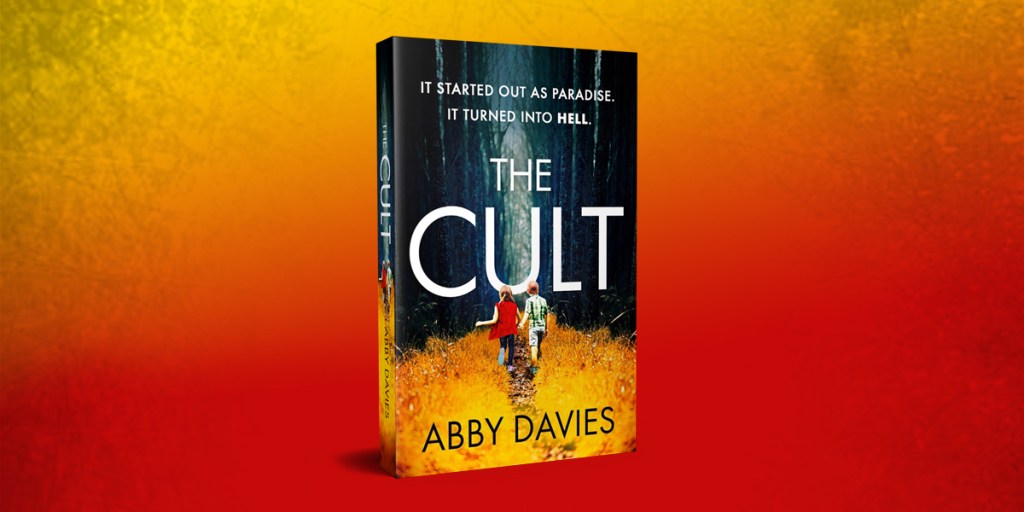
An interview with… Abby Davies

Abby Davies is a fantastic writer and I have been gripped by her first two psychological thrillers, Mother Loves Me and The Cult. I am delighted to share this interview with her.

Please introduce yourself and your published works

I’m 38, live in Wiltshire with my hubby, 4-year-old daughter and two crazy cockers, and I’ve always been passionate about reading and writing (and shopping). Mother Loves Me and The Cult are my psychological thrillers. I wrote Mother Loves Me while teaching secondary school English, which I think helped because it’s written from the POV of a 13-year-old girl. I even test-trialled the first chapter on my students, and completely freaked them out!

When did you start writing? Can you tell me about your journey to publication?

I wrote my first novel when I was 18, submitted it to about 20 agents and received 20 rejections! Every couple of years after that I wrote another book, experimenting with Young Adult Dystopian and books for younger readers as well as adult thrillers. In 2012 I did a Creative Writing MA which ironically damaged my confidence! I lost my mojo for a while, but when I read Emma Donaghue’s Room closely followed by S. J. Watson’s Before I Go to Sleep, the idea for Mother Loves Me sprang forward and I wrote my first ever psychological thriller. I submitted the first 5,000 words to Mslexia Novel Competition 2018 and was shortlisted! Part of the prize was to attend a pitching workshop in London. I pitched my book to an agent, and they offered me representation. After 17 years of hard graft, I’d finally got an agent! Euan secured me a publishing contract with HarperCollins and Mother Loves Me was published in 2020. The Cult came out the following year. It really was a dream come true.

What were the pivotal moments so far in your writing career and what you have learned from them?

A truly pivotal moment was receiving my first set of notes from my agent. I learned a great deal from Euan about pacing; never rush the scene when there is high tension – draw it out and let it build to maximise suspense.

What drew you to write crime fiction?

I’ve always watched and read crime, finding it absorbing, intriguing and exciting, so I think my love for the genre drew me to write it.

Who are your favourite authors?

Stephen King, Dean Koontz, Jane Austen, Jilly Cooper, JK Rowling, Kathryn Stockett and many more!

What advice would you give to other people wanting to write?

Read everything about writing that you can get your hands on, read numerous books in your chosen genre/area, enter competitions, and never ever give up. Rejection stinks but sadly it’s inevitable in this business.

Finally, what are you working on now?

I’m trying my hand at a rom-com! It’s so fun and refreshing to write something a bit lighter. I’m loving it!

Thanks Abby! You can follow Abby on Twitter @Abby13Richards and on Instagram @AbbyDaviesAuthor.

Book Three – the story so far (setting)

All my books so far have been set in Yorkshire, and Book Three is no exception!

Book Three, provisionally called The Challenge, is set in the city of York. York has a special place in my heart as my grandma used to take me as a child to see the daffodils around the city walls.

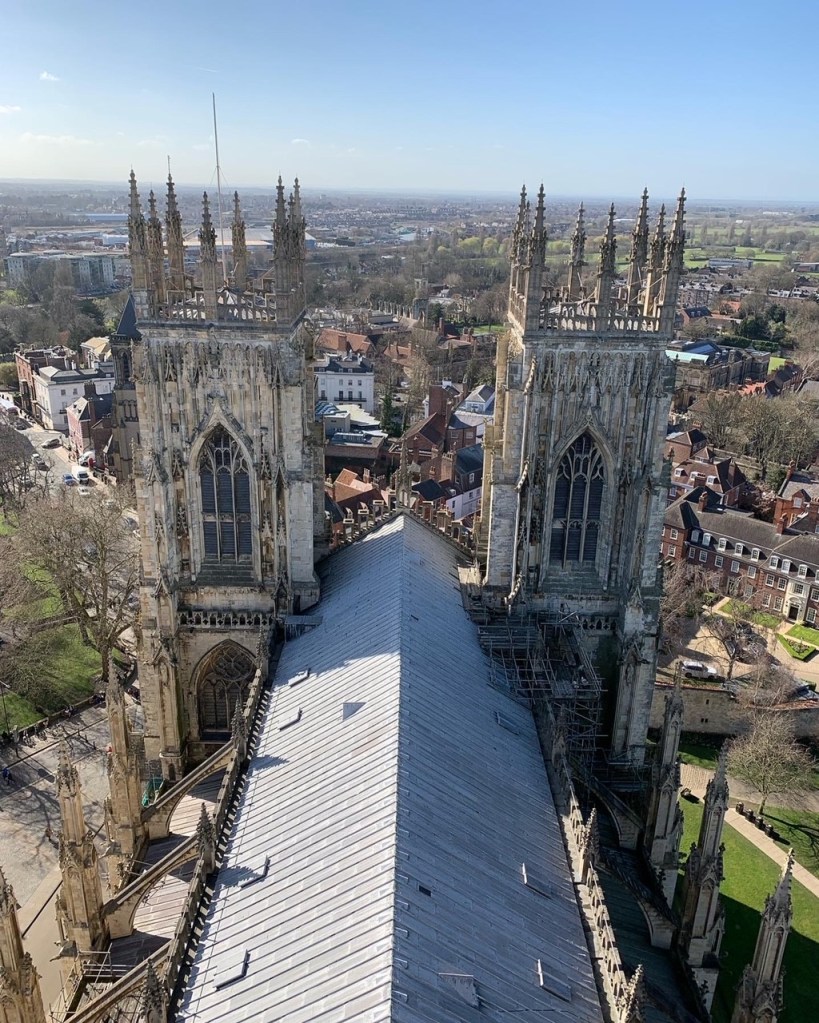
It is a place steeped in history and full of iconic buildings, such as the magnificent York Minster. You can find out more about the history of York on this website: https://www.visityork.org/history-of-york

The Challenge sees Libby and Peter (from The Wedding Murders) reunited to investigate the mysterious death of a teenaged boy in York.

As part of the research, I made several trips to the city, looking for good places to set key scenes.  

The Museum Gardens and St Mary’s Abbey

The ruins of St Mary’s Abbey, York

York Minster

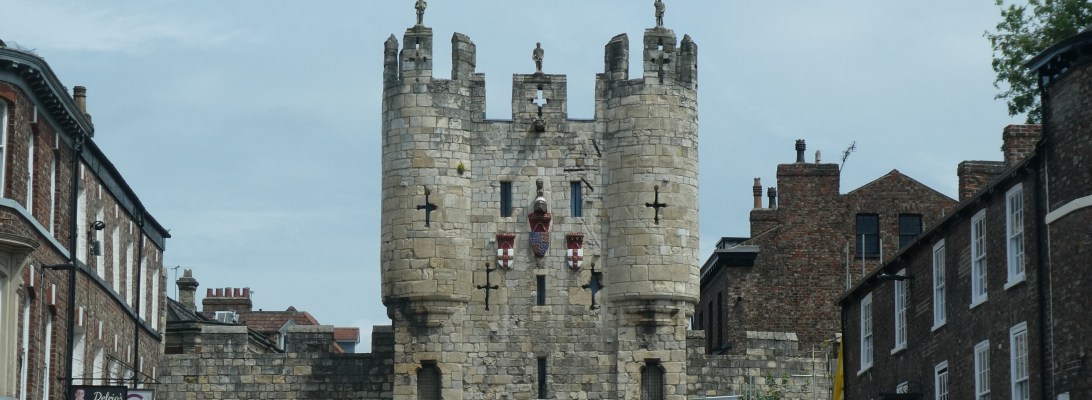
Micklegate Bar

Micklegate Bar in York

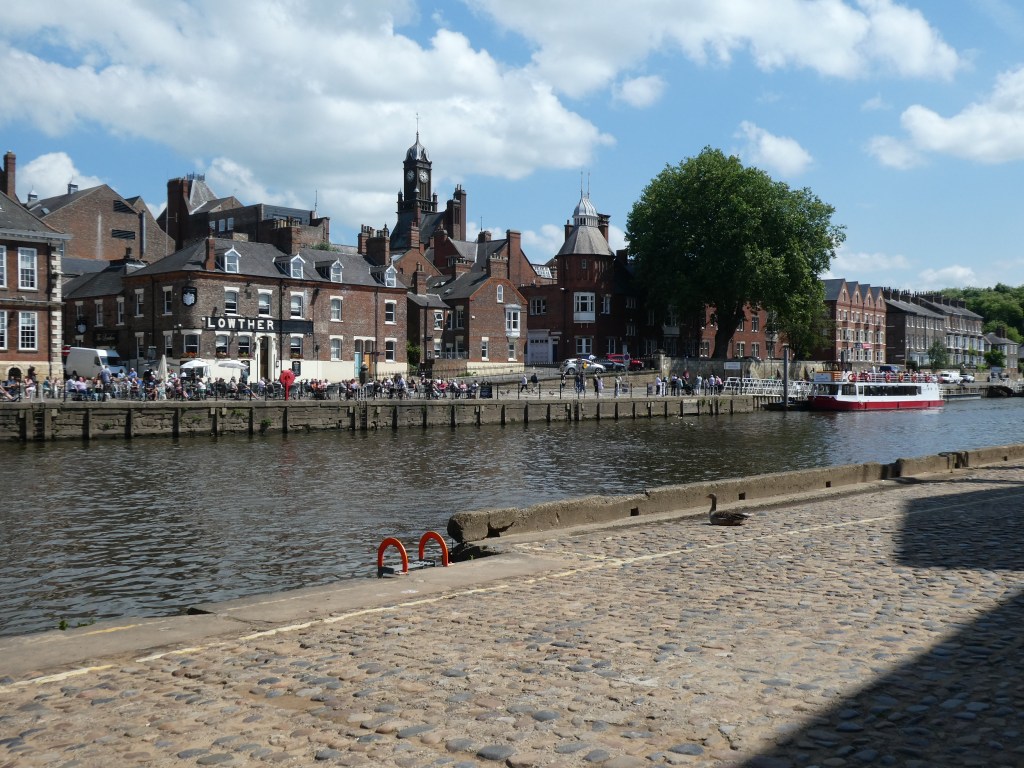
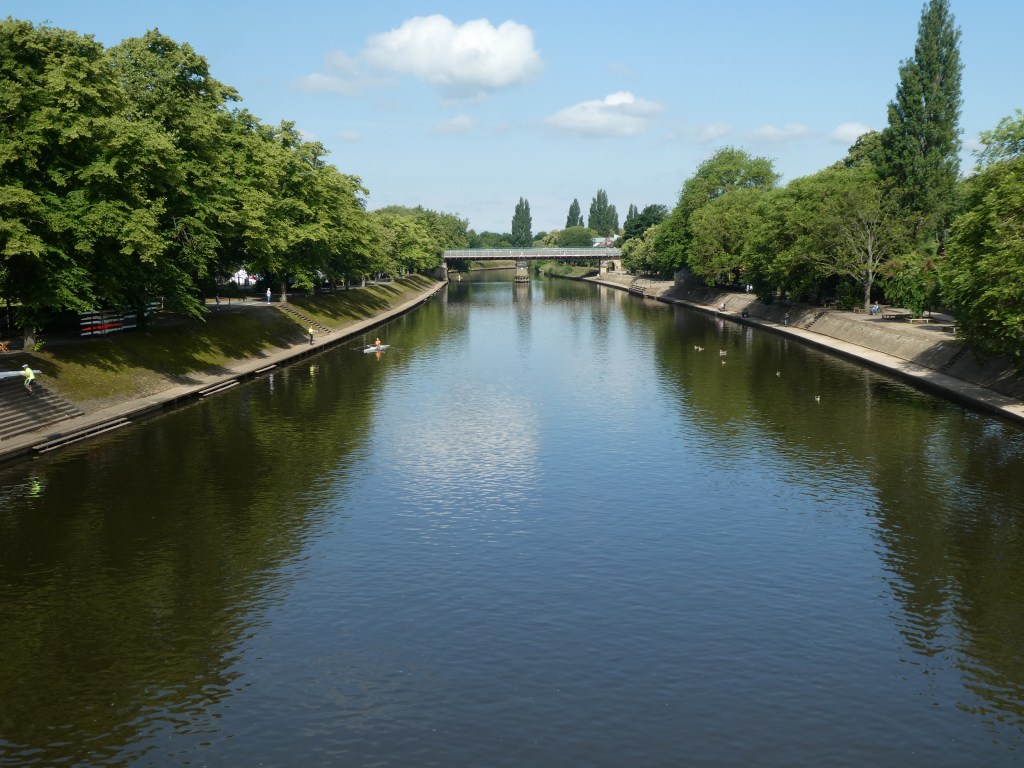
The River Ouse

Clifford’s Tower

Clifford’s Tower

The Challenge is currently with my agent, awaiting her feedback, before we submit it to my publisher. Fingers crossed they like it! 

On the Shelf: May 2022 reads

I read a lot of books in May!

  • Keep Them Close by Sophie Flynn (proof)
  • Letters from a Stoic by Seneca
  • Digital Minimalism by Cal Newport
  • Crossing the Lines by Amanda Huggins (re-read)
  • The Bad Sister by J A Corrigan
  • That Night by Gillian McAllister
  • Jude the Obscure by Thomas Hardy (re-read)
  • The Burning Girls by C J Tudor

Keep Them Close is Sophie Flynn’s second novel and is due out in July 2022. It’s a gripping and intense psychological thriller, exploring the double-edged sword of anonymous internet forums. Chilling, creepy and frighteningly plausible with a clever twist. Well worth a read!

Considering there are more than 2,000 years between the publication dates of Letters from a Stoic by Seneca and Digital Minimalism by Cal Newport, you might think they wouldn’t have much in common, but you’d be wrong! I was surprised how much I picked up from Seneca’s letters about handling the ups and downs of daily life. I underlined a lot of passages (sorry!) to come back to later.

I also found Digital Minimalism eye-opening in its explanation of how social media platforms and apps are designed to make sure you spend as much time as possible on them. I think we all know this on some level, but it doesn’t stop you getting sucked in. There are some good strategies in this book to tear you away from your devices. I managed to follow some, but not all, of the advice and it is recommended if you are worried about how much time you spend online.

In May, I did an event at Marsden Library with author Amanda Huggins, so I reread her novella, Crossing the Lines. This is a coming-of-age road-trip story set in the American mid-west in the 1970s. Beautifully written with wonderful descriptions of the American landscape and some unforgettable characters.

I am appearing at Essex Book Festival in June in conversation with J A Corrigan, so I took the opportunity to read her latest novel, The Bad Sister. This is a gripping thriller about the relationship between three surviving sisters from a toxic family, and a tragic event that reverberates through their adult lives. It has some parallels with Gillian McAllister’s novel That Night, in which three siblings cover up a murder in Italy. The siblings are very close, but can they really trust each other?

Jude the Obscure is one of my favourite novels of all time, but I hadn’t read it in a while. It’s always a pleasure to return to the classics as an adult because you read them so differently than you did when you first encounter them as a teenager. I remember really identifying with Jude as he struggled to achieve his ambitions of becoming a scholar, but this time I was intrigued by the women in his life and the difficult decisions they had to make. The book has such a tragic ending which still has the capacity to shock even though I knew it was coming.

C J Tudor is one of my favourite writers. I have loved all her books, but I think The Burning Girls might be my favourite so far. The main character is a vicar who moves to a country parish and soon discovers some pretty dark secrets. It has a bit of horror intertwined with a gripping thriller and I absolutely loved it!   

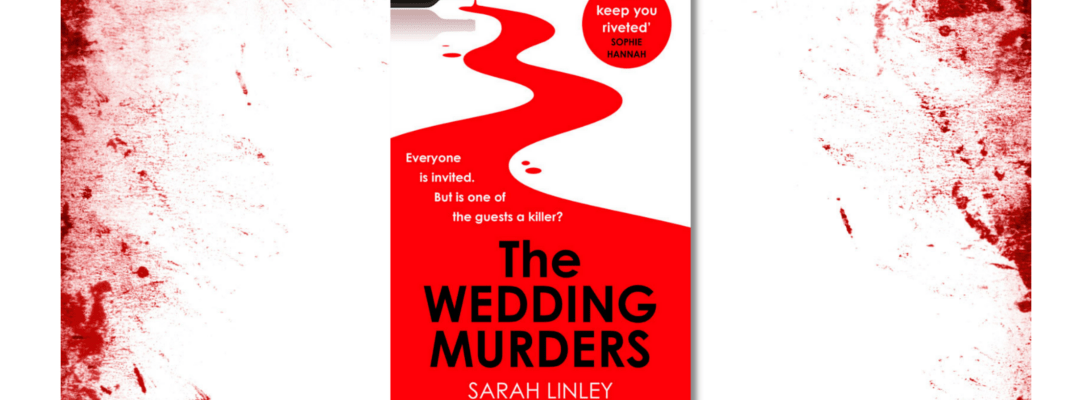
The Wedding Murders is now out in paperback!

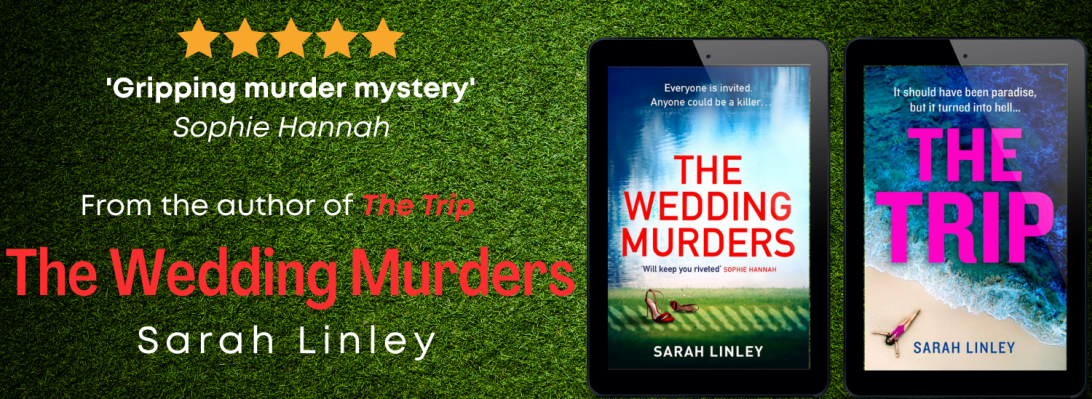
I’ve been busy over the past couple of months promoting my new book, The Wedding Murders.

It’s been a bit of a whirlwind since the e-book was published by One More Chapter in February (2022). It seems to be doing well and one of the highlights was when it got a bestseller flag (for one day only!) on Amazon US. On 19 March, it hit number 145 in the overall chart and was number 1 in the subcategories Amateur Sleuths and Vigilante Justice Thrillers. The latter is not a description I would use for the book but I’m not going to complain!

There are now more than 200 reviews of the book on Amazon (UK) so I am really thankful to the people who have taken the time to leave a review or a rating. It makes such a difference!

To promote the book, I did my first ever Facebook Live for the UK Crime Book Club with Abby Davies and Casey Kelleher. I was TERRIFIED but the organiser, Samantha Bowley, and the other authors involved were so lovely and put me completely at ease. If you join the Facebook Group, you can watch the video.

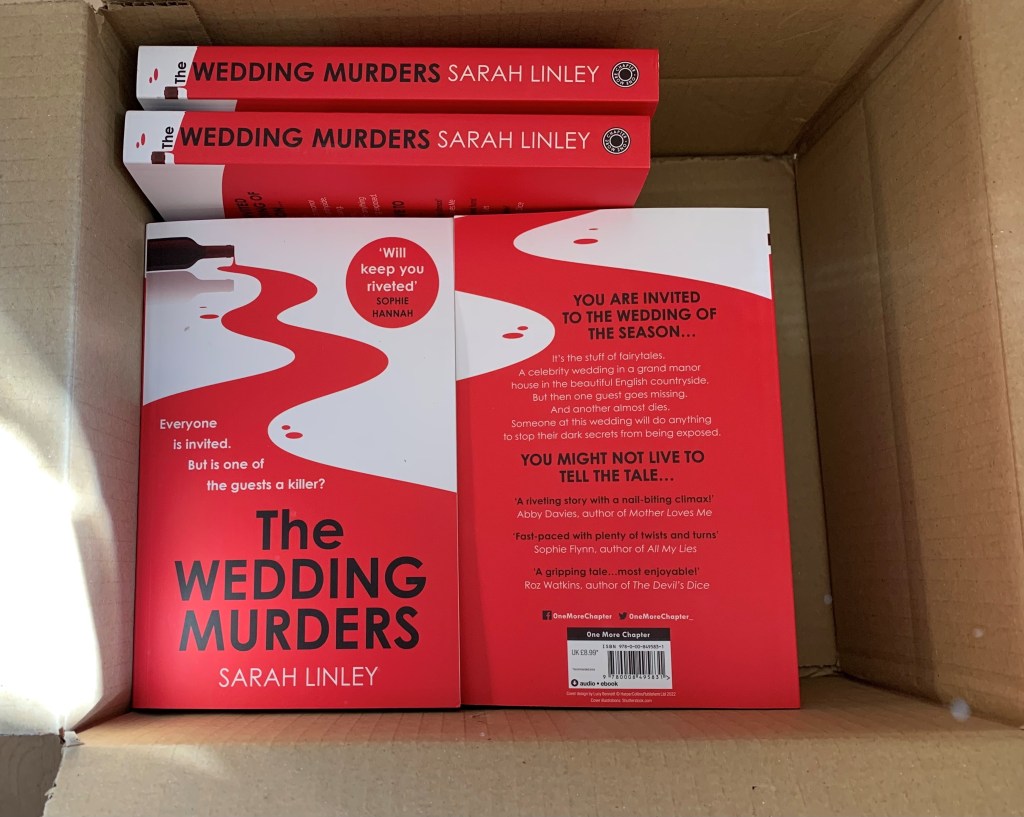
The paperback of The Wedding Murders was released at the end of April and receiving my author copies was another highlight. It’s always nice to be able to hold your book in your hands!

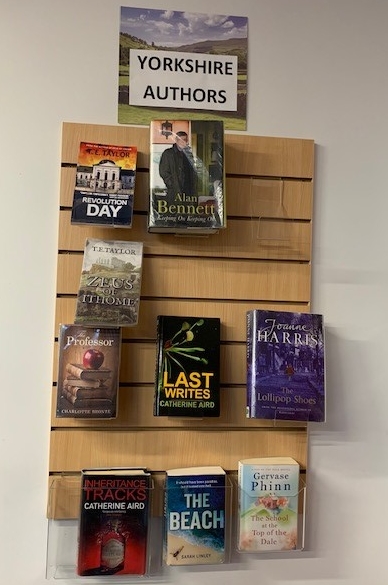
This week I returned to Marsden Library to do an in-person event with my friend and fellow author, Amanda Huggins. As always, we were made to feel very welcome. I also got a real kick out of seeing my debut novel on a display of Yorkshire Authors, alongside Alan Bennett, Joanne Harris and Charlotte Bronte. You couldn’t ask for better company!

And my next event is Essex Book Festival in June when I will be in conversation with J A Corrigan. Tickets are available here: https://www.essexbookfestival.org.uk/event/the-bad-sister-and-the-wedding-murders/

In the meantime, I will be putting the finishing touches to the latest draft of Book Three (provisionally called The Challenge) this weekend before returning it to my agent. It’s a sequel to The Wedding Murders and I have enjoyed being back with my main character, Libby, and her partner-in-crime, Peter.

You can buy The Wedding Murders online from a number of retailers including Waterstones and WH Smith, or you can purchase it from Amazon using the link below:

On the Shelf: April 2022 reads

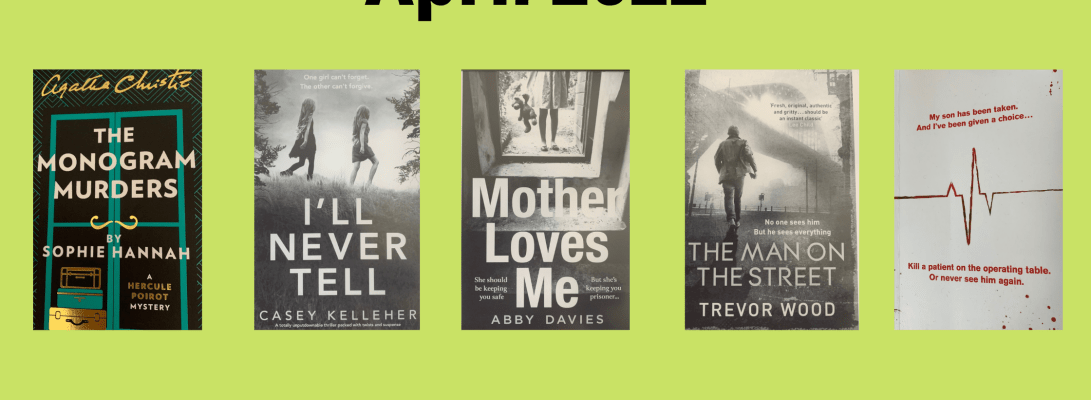
In April 2022, I read a lot of crime fiction:

  • The Monogram Murders by Sophie Hannah
  • Mother Loves Me by Abby Davies
  • I’ll Never Tell by Casey Kelleher
  • The Man on the Street by Trevor Wood
  • Do No Harm by Jack Jordan (proof).

And one book for research:

  • Clay Models and Stone Carving by Irene Dancyger.

The Monogram Murders is the first in Sophie Hannah’s continuation of Agatha Christie’s Poirot series. True to Agatha Christie’s style, this is a golden-age puzzle mystery involving three apparently identical (but not in Poirot’s eyes!) murders in a London hotel. It will keep you guessing from start to finish and was a lot of fun to read.

I appeared on a Facebook Live panel for the UK Crime Book Group in April with fellow crime writers, Casey Kelleher and Abby Davies. I had already read Abby’s latest book, The Cult, so took the opportunity to read her debut Mother Loves Me. The Cult was one of my favourite books last year and Mother Loves Me is also brilliant. Both books are intense, creepy and claustrophobic. Recommended!

Casey’s latest novel I’ll Never Tell is a departure from her gangland novels and I really enjoyed it. Both writers are really good at capturing a child’s voice and creating gripping and disturbing narratives. There are some great twists in I’ll Never Tell.

I was a little apprehensive about reading The Man on the Street because I work in the homelessness sector, and I was worried about how it might be portrayed. I have to say that Trevor Wood is spot on with his empathetic depiction of life on the streets, the characters, some of the situations they end up in and the challenges they face. This was a great thriller with fantastic characters, and I particularly loved the inclusion of Dog. I am looking forward to reading the rest of the series.

I picked up Do No Harm by Jack Jordan at Theakston’s Old Peculier Crime Festival in Harrogate last summer, but I have only just read it. This is a high-octane thriller from the start which leaves the reader constantly asking the question ‘what would I do in this situation?’. I liked the way all the characters were flawed in some way, but you were still rooting for them.

I borrowed Clay Models and Stone Carving from the library for some research into one of my characters for book four. He is a stone mason, so I needed to understand exactly how you go about sculpting stone. It was completely fascinating and made me really think about the structures I walk past every day without noticing!

Fairy tales and crime fiction

Crime writers are rarely in the business of delivering happy endings, but our books may have more in common with fairy tales than we think.

Reading some classic children’s stories to my young nephew I was struck by how much criminality lay between the pages of these seemingly innocent bedtime yarns.

Next time you’re stuck for a plot, you could do worse than peruse your children’s bookshelves for inspiration.

BURGLARY AND TRESPASS – GOLDILOCKS AND THE THREE BEARS

Is it any surprise that the three bears are angry when they come back from their walk not only to discover someone has broken into their property, but also eaten their food and slept in their beds?

In one of the original endings to this tale, the bears throw Goldilocks onto the fire in retribution. The 21st century version is much tamer – Goldilocks runs away. Let’s hope she didn’t leave any fingerprints…

KIDNAP – HANSEL & GRETEL

The Witch lures Hansel and Gretel into her house with the promise of gingerbread. Once there she captures her young victims and puts her cauldron on the stove, intending to eat them.

Kidnap with a threat of cannibalism – and we read these stories to children?

POISON – SNOW WHITE

Toxic relationships are a common theme in both fairy tales and crime fiction. As the saying goes, you can choose your friends, but you can’t choose your family!

Snow White’s jealous stepmother puts her to sleep with a poisoned apple. Modern day equivalents might be Rohypnol or GHB.

INTIMIDATION – THE THREE LITTLE PIGS

‘Let me in, let me in, or I’ll blow your house down!’ cries the wolf outside the little pig’s door. Intimidation is one of the building blocks of a good thriller.

GASLIGHTING – THE EMPEROR’S NEW CLOTHES

The Emperor loves his clothes – so much so that he is easily tricked into believing in a special cloth that only wise men can see. Everyone around him keeps quiet as the naked Emperor parades around the town in his birthday suit. A lesson in vanity or a pitiable victim of fraud?

These days you are perhaps more likely to fall foul of cyber fraud – online retailers selling you something that doesn’t exist. Or how about creating a rich, influential character that no one dare stand up to?

Some plot devices found in fairy tales will feel very familiar to crime writers:

THE UNINVITED GUEST – SLEEPING BEAUTY

The doors are closed, the party has begun, but is there a killer among the guests? The premise of the closed-door mystery has a lot in common with the opening to Sleeping Beauty.

THE TICKING CLOCK – CINDERELLA

If Cinderella hadn’t had to leave the ball by midnight, there would be no tension in the story. She could have danced with the Prince all night, left her number and lived happily ever after. That midnight deadline is what makes all the difference. No time to stop and pick up your shoe, Cinders, get out of there before disaster strikes!

AN OFFER YOU CAN’T RESIST – PINOCHHIO

Pinocchio is all set to go to school like a real boy when he encounters the fox and the cat who tempt him to go to the fair instead. Things go badly wrong and get even worse when Pinocchio tries to lie his way out of his predicament. The only thing that can save him is listening to his conscience and telling the truth. Good job our characters don’t feel the same way, otherwise there wouldn’t be much mystery!

THE QUEST – THE BRAVE LITTLE TIN SOLDIER

In many fairy tales the heroes are put to the test before they can achieve their goal. Similarly, detectives have to overcome a series of obstacles before they can unmask the killer.

Spare a thought for The Brave Little Tin Soldier. He falls out of a window, nearly drowns, is swallowed by a fish, thrown into a stove, and set alight before he wins his true love.  

All writers know the importance of an atmospheric setting in our fiction, and fairy tales are no exception.  

INTO THE WOODS – LITTLE RED RIDING HOOD

Some of the best fairy tales are set in woodland for a very good reason. Darkness, shadows, plenty of places to hide. The forest serves as a departure from the safety of home and a threshold to adventure.

Little Red Riding Hood, Hansel and Gretel, and Goldilocks are all tales of disobedience and straying too far off the path. In the modern era, it’s also a good way of losing your 4G…

CASTLES – THE PRINCESS AND THE PEA

The castles in fairy tales are often occupied by people of great power and privilege. To gain entry, peasants have to be very clever or very beautiful. The contrast between rich and poor, and the abuse of power and privilege, is fertile ground for crime fiction writers.

TOWERS AND LOCKED ROOMS – BEAUTY AND THE BEAST / RAPUNZEL

Always check your exit! The creepy castle or mansion house is a stalwart of crime fiction for good reason. Once you’ve entered, it’s not always that simple to escape. Rapunzel grows her hair to evade her capture while Beauty wins over the Beast. Modern day criminals might not be quite so easy to win round.

At the heart of every fairy story is a morality tale. Perhaps crime fiction is the contemporary equivalent?

This article was first published in Red Herrings, the magazine for members of The Crime Writers Association.

Photo by Cederic Vandenberghe on Unsplash

On the Shelf: February 2022 reads

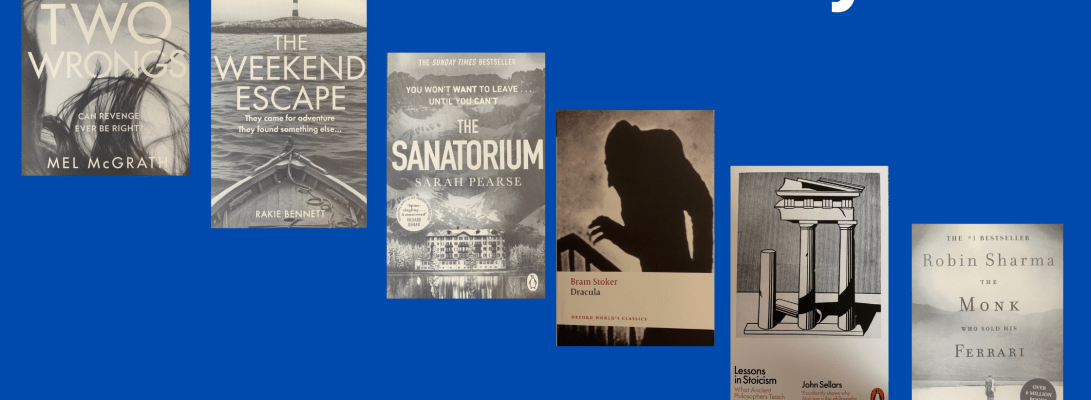
In February 2022, I read an eclectic mix of books: three psychological thrillers, a classic and a couple of non-fiction titles.

I read:

  • Two Wrongs by Mel McGrath
  • The Weekend Escape by Rakie Bennett
  • The Sanatorium by Sarah Pearse
  • Dracula by Bram Stoker
  • The Monk who sold his Ferrari by Robin Sharma
  • Lessons in Stoicism by John Sellars

The psychological thrillers all had very different settings – Two Wrongs is set in a fictional university and involves a spate of suicides among female students; The Weekend Escape is set on a stormy island off the coast of North-West England; and The Sanatorium is set in a creepy hotel, a former sanatorium, in snowy Switzerland. I enjoyed them all, but The Weekend Escape was my favourite as it was so fast paced!

I bought Dracula on a recent trip to Whitby. I hadn’t read it before, and I thoroughly enjoyed it. I particularly liked the character of Mina and the use of setting and atmosphere to add to the tension. I thought Stoker made effective use of multiple narration and I liked how the story unfolds through different perspectives.

I read The Monk who sold his Ferrari by Robin Sharma after reading The 5AM Club. There is quite a lot of cross-over between the two books, but both are worth reading, particularly if you are looking for some focus in a very distracting world! At the heart of The Monk who sold his Ferrari is a rather odd allegory involving a garden, a lighthouse and a sumo wrestler (!) which is, at the very least, memorable! I have tried to adopt some of the principles Sharma advocates, but I am finding the early starts very challenging to stick to.

Lessons in Stoicism is quite a short book and very much an introduction to Stoicism. It was an enjoyable read but I would have preferred something more in-depth as I was familiar with most of the concepts in it.

I am now turning my attention to The Dying Day by Vaseem Khan, who is rapidly becoming one of my favourite writers. This is the second in the Malabar House mystery series set in post-partition India and it is really good so far! I love the main character, Inspector Persis Wadia, and all the historical details which feel meticulously researched.  

What are you reading this month?